

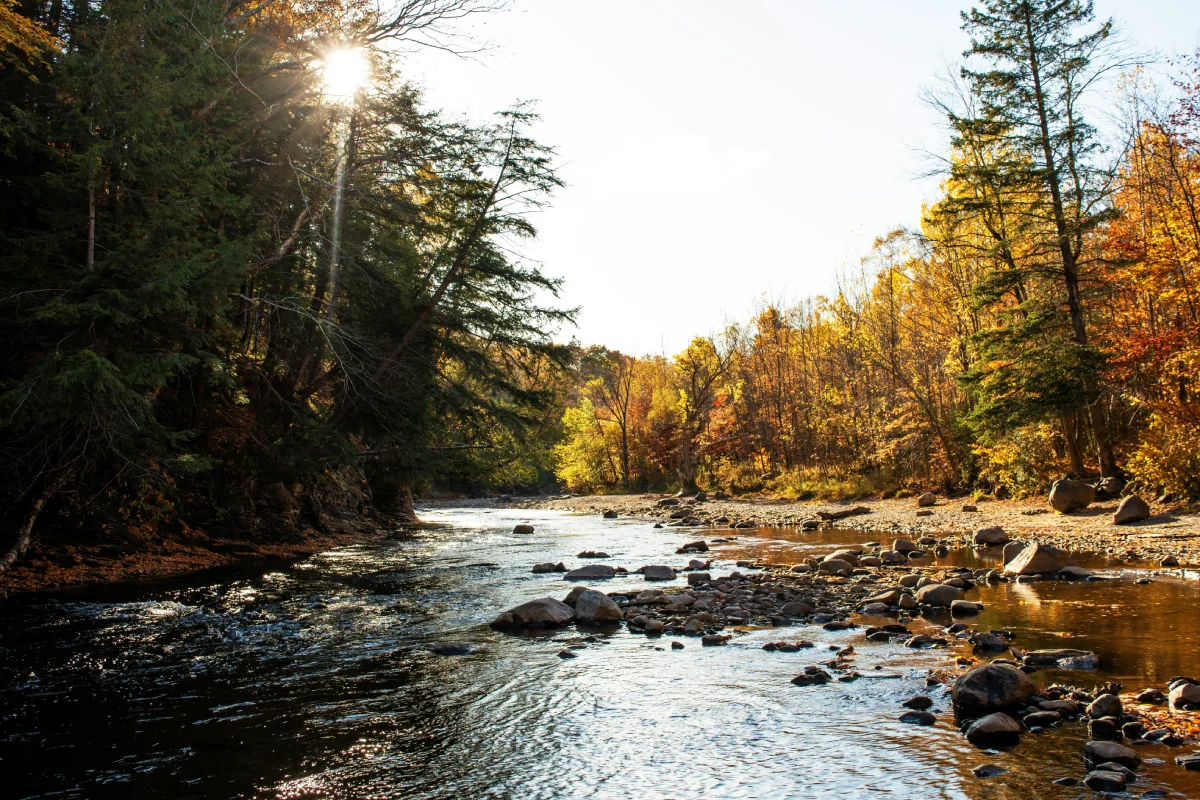
This summer, Quebec’s rivers have never been so parched. In many regions, once-roaring riverbeds have turned into cracked ribbons of stone. Municipalities were forced to ration water, wells ran dry, dams struggled to generate power, and aquatic life fought to survive in thin, polluted streams of lukewarm water.
This is no longer just a dry spell—it marks a historic turning point. Quebec, long proud of its thousands of lakes and rivers, is discovering that it is not immune to a deepening water crisis. Water, once seen as an inexhaustible resource, has suddenly become scarce, fragile, and precious.
In the face of this reality, one question looms: how far will we let our rivers run dry before we act? Because behind every drop lost lies more than an environmental issue—it’s the unraveling of an entire economic, social, and ecological balance.
Climatic and Hydrological Context, An Alarming Precipitation Deficit
As reported by Hugo Duchaine in his Journal de Montréal article on October 11, since the beginning of summer, several regions across Quebec have recorded rainfall deficits ranging from 30% to 50% below seasonal norms. In September, some areas received only 50 mm of rain, compared to the usual average of 140 mm, putting severe pressure on lakes, rivers, and groundwater reserves.
According to the CASCADES hydrological project, low-flow episodes (or drought flows) are expected to become more severe in the future due to climate change, disrupting the natural water cycle between seasons. The Government of Quebec is closely monitoring these changes through water-level and flow tracking systems, adjusted according to various climate scenarios for the 2050 and 2080 horizons.
Drought affects not only surface water but also groundwater reserves, which are vital for many private wells. In eastern Quebec, well owners are already facing near-depleted water reserves.
In short, Quebec is experiencing a persistent hydric deficit, one that is eroding the safety margins of both its rivers and underground water resources.
Visible Signs Across Quebec’s Landscape
The effects are now clearly visible in everyday life:
- Rivers running dry, beds exposed: some waterways have nearly vanished, revealing parched, stony riverbeds.
- Dry wells: in rural areas, particularly in Gaspésie, many private wells are no longer producing enough water.
- Compromised municipal supply: in urban centres, drought makes it harder to supply water systems with raw water. Lower dilution levels in rivers and at treatment plants increase the costs of purification.
- Water-use restrictions: several municipalities have recommended or imposed limits on outdoor water use, such as lawn watering, car washing, or filling pools, reserving it for essential needs only.
- Strained agriculture: farmers are struggling to irrigate crops as river flow levels drop too low for pumping.
- Impacts on Hydro-Québec: the drought is affecting electricity generation and dam management, as water availability is a key factor in hydroelectric operations.
- Aquatic life at risk: fish and invertebrates are suffering from habitat loss, as well as from rising water temperatures and increasing pollutant concentrations in shrinking basins.
In short, the drought is amplifying the existing vulnerabilities within Quebec’s water network.
Behind the Drought: A Storm of Human and Natural Causes
If Quebec’s rivers are drying up today, it’s not only because of the climate. A web of interconnected factors, some natural, others directly tied to our collective choices, is amplifying the crisis and weakening the province’s hydrological balance.
Climate change acts first as an accelerator. Heat waves are becoming more frequent, evaporation rates are rising, and precipitation patterns are increasingly erratic. Dry spells are lasting longer, leaving rivers with less time to recharge. According to Ouranos, these periods of water deficit, particularly severe during summer, are expected to become both more frequent and more intense over the coming years.
On top of this climatic disruption comes mounting human pressure. As river flow decreases, the natural capacity to dilute effluents collapses. Municipal and industrial discharges become more concentrated, making water treatment more complex and costly. At the same time, water demand continues to grow: agriculture, industry, and municipalities are drawing from already fragile reserves. The Bulletin des agriculteurs notes that surface water withdrawals are often underestimated, which prevents an accurate picture of the real situation.
Territorial changes further aggravate the problem. Urbanization, deforestation, and the construction of roads and dams deeply alter the natural dynamics of watersheds. These developments reduce the soil’s ability to absorb and retain water, accelerate runoff, and limit the recharge of groundwater. As a result, rivers become more vulnerable to temperature and precipitation variations.
Adding to this is a dangerous domino effect. The CASCADES project has shown how prolonged droughts trigger a chain reaction: river flows drop, aquatic habitats disappear, rivers lose their natural self-purification capacity, and biodiversity weakens. Each compromised link increases pressure on the others, ultimately threatening the overall stability of the system.
Behind the current drought lies a far more complex reality. Quebec is facing a convergence of climatic, human, and structural factors that are reshaping our relationship with water. It is a silent but consequential crisis, one that reminds us how profoundly our actions, infrastructure, and collective decisions influence the vital cycle of our rivers.
Short- and Long-Term Consequences
The impacts of this situation are wide-ranging:
- On health and access to drinking water: in some municipalities, drinking water is becoming more expensive, harder to secure, and in some cases, insufficient in both quantity and quality.
- On the local economy: farmers, rural municipalities, businesses, and industries all depend on water; any disruption in supply or increase in costs can weaken local economies.
- On biodiversity and ecosystems: aquatic species, especially “sentinel” fish, are under threat. The overall functioning of riverbank ecosystems is being disrupted.
- On hydroelectric potential and dam management: lower water flows can limit electricity generation capacity and reduce reservoir flexibility.
- On future resilience: recurring and intensified drying weakens water infrastructure and governance, undermining Quebec’s long-term ability to manage its water resources sustainably.
Initiatives and Solutions Already Within Reach
Fortunately, several courses of action are emerging to counter, or at least mitigate, these effects:
- Hydrological monitoring and modeling: water flow tracking tools (such as those developed by the Government of Quebec) help anticipate critical episodes and guide timely interventions.
- Ecological river restoration: rehabilitating riverbanks, restoring riparian wetlands, and reducing sediment disturbances strengthen rivers’ natural ability to retain water.
- Improved water use management and fees: regulating and better documenting water use across agriculture, industry, and municipalities can help prevent excessive withdrawals during critical periods.
- Infrastructure optimization: modernizing water treatment systems, promoting water-saving practices (such as reducing losses and recycling), and adapting dams to better regulate flow are key to increasing resilience.
- Mobilization and coordination: collaboration among foundations, governments, municipalities, and local communities is essential to achieving lasting results.
- Awareness and behavior change: encouraging citizens to limit non-essential water use, such as watering lawns, washing cars, or filling pools, especially during drought periods, remains one of the simplest and most effective actions.
The Fondation de Gaspé Beaubien is driving progress on all these fronts by supporting AquaAction, an initiative that empowers innovators and entrepreneurs to develop and deploy cutting-edge technologies in the water sector.
These water crisis solutions aim to measure, treat, recycle, conserve, and protect freshwater, from smart irrigation in agriculture, to industrial water reuse, urban leak detection, and the fight against contaminants. They support every sector of society: manufacturing, energy, agriculture, artificial intelligence, and even defense.
Water as the Thread of a Resilient Future
The Drying of Our Rivers Is No Isolated Phenomenon, it is the symptom of deeper dynamics tied to climate, land use, and water governance. In Quebec, the scale of the current drought demands that we rethink our relationship with water, as a fragile, precious, and interconnected resource.
The Fondation de Gaspé Beaubien has made it its mission to have water security recognized as a matter of national security, and to act as a catalyst for scaling up sustainable and innovative solutions to this unprecedented crisis.
Addressing this challenge requires strong alliances, bold innovation, coherent policies, and the active mobilization of all stakeholders.
References
Journal de Montréal. Le Québec est à sec: le manque d'eau cause des problèmes dans les villes, dans les champs et sur les lacs de la province cet automne. Accessed October 11, 2025.
TVA Nouvelles. Sécheresse prolongée: les résidents de Québec doivent réduire la consommation d'eau. Accessed October 3, 2025.
Durano. Étiages et sécheresses hydrologiques – Impacts. Accessed October 11, 2025.