


Water shapes how communities function. What we can build. What we can afford. How well we are prepared for an increasingly unstable climate. As April brings more rain, flooding offers one of the clearest examples of how water-related risks are changing life across Canada.
The country's water story is changing fast. Flooding, drought, and extreme weather are putting more pressure on communities across the country and on water systems that are already under stress. The impacts are becoming harder to ignore. Floods are damaging homes, disrupting infrastructure, and driving up costs. They are increasing pressure on households, municipalities, and insurers.
British Columbia as a Warning Sign
British Columbia offers a clear view of what this looks like in practice. Flood risk in the province is growing and recurring, shaped by both climate change and land-use pressures. In 2024, the province released its B.C. Flood Strategy, recognizing that flood risks are increasing and that a more coordinated, long-term response is needed. Yet the strategy still lacks the implementation funding needed in the 2026 budget to respond at the scale many communities require, even as flood warnings, evacuations, and recovery costs continue to rise.
The situation in B.C. shows what happens when climate pressure, watershed pressure, and infrastructure pressure meet. It also reflects a broader national reality: flood risk is growing across Canada, requiring a more proactive approach.
The Risk of Atmospheric Rivers
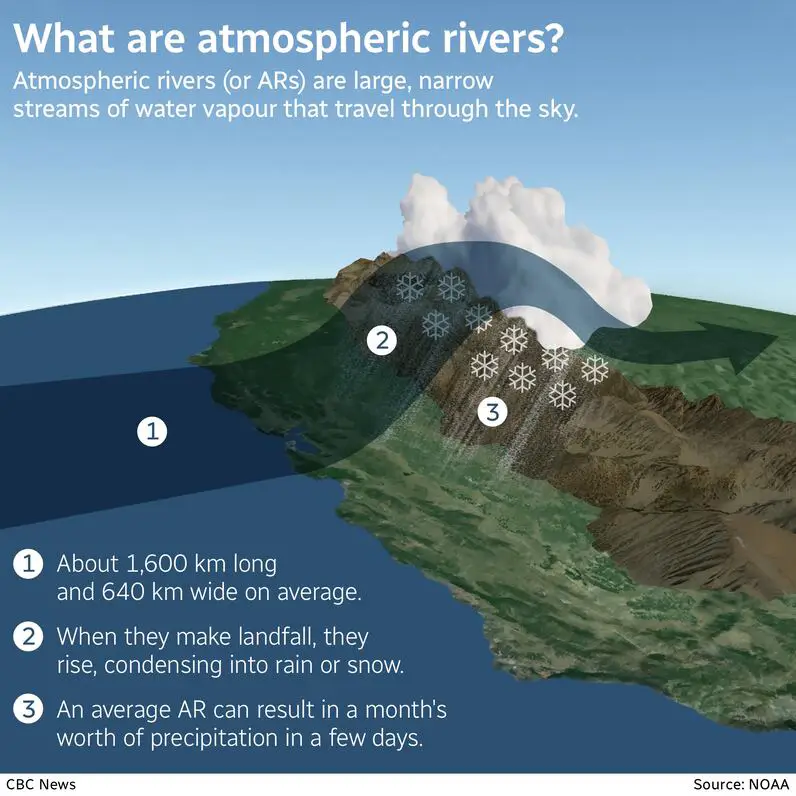
One reason flood risk is so acute in B.C. is the increasing danger of atmospheric rivers. Often described as a "river in the sky," an atmospheric river is a long and narrow band of air carrying large amounts of water vapour through the atmosphere. When that moisture is pushed upward over mountains, it cools and falls as intense rain or snow. These rivers can help replenish water supplies, but when they are strong, they can also trigger heavy precipitation, flooding, landslides and widespread damage. Meanwhile, climate change is making them more frequent and intense.
B.C. has already seen how destructive these events can be. In October 2024, a Category 4 atmospheric river hit the Lower Mainland, leaving five people dead. In the Fraser Valley, Ned Murray of the Sumas First Nation says that the answer is not to fight water, but to learn to live with it. In that landscape, flooding is natural, but climate change makes it more severe. The challenge is to respond more intelligently by rethinking infrastructure, restoring ecological function, and respecting the cultural importance of water to the people who have lived with it longest.
Why Floods Are Becoming More Common and More Damaging
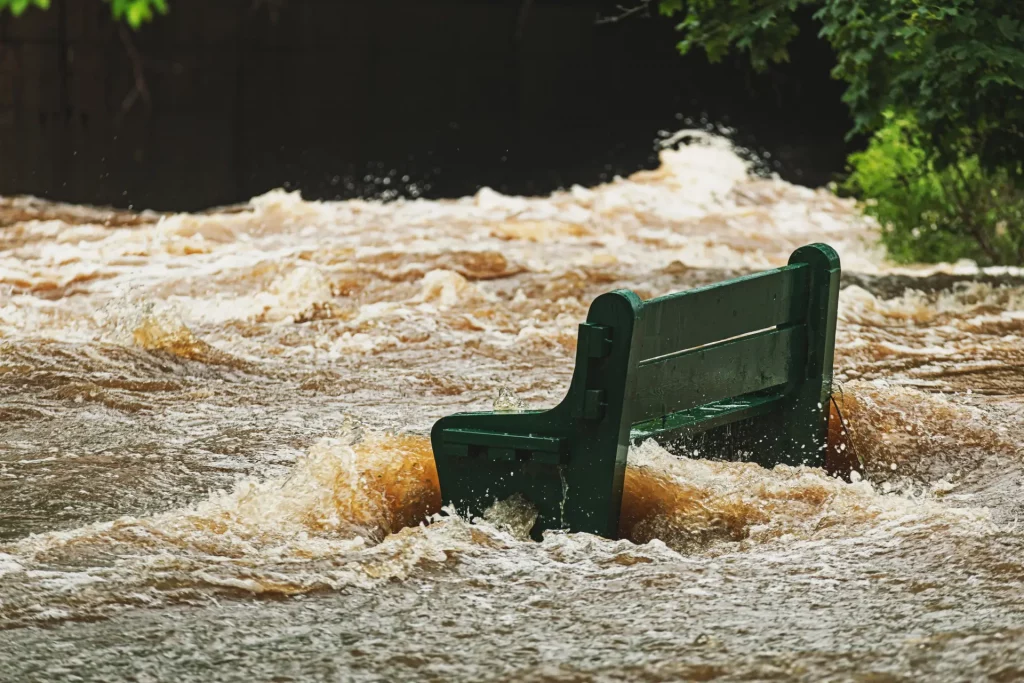
Floods are becoming more common for environmental reasons, but also for human ones. As temperatures rise, warmer air can hold more moisture. That means storms can deliver heavier rainfall over shorter periods of time. The result is greater pressure on rivers, drainage systems, roads, and built infrastructure. Flooding is already Canada's most common and costly natural hazard, and climate change is making those impacts worse. Flood damage in Canada is estimated at $2-5 billion annually.
Human activity exacerbates flooding. In fact, flood risk begins upstream: in wetlands, forests, headwaters, and floodplains. When wetlands are drained, lakes altered, and forests heavily cut, the land loses part of its natural ability to absorb water. This is why flooding cannot be understood only as a weather event. It is also shaped by land use, infrastructure choices, and how much space we leave for water to move.
Flooding is Also a Financial Risk
Water risk is no longer episodic. It is systemic, and it is reshaping Canada's financial stability. Flooding and storms are now major drivers of insured losses in Canada. At the same time, rising exposure is putting greater strain on households, communities, insurers, housing systems, and municipal budgets. Insurance premiums have risen by 31% since 2021, making water instability now a direct driver of insurance markets, housing affordability, and financial risk.
When water systems fail, multiple consequences follow:
- Increased flooding drives up insurance payouts and reduces coverage availability
- Rising insurance costs make homeownership more expensive and increase mortgage risk
- Infrastructure failure raises municipal debt and taxpayer burdens
- Repeated exposure to flood damage can also make real estate values and assets more volatile
Beyond the fact that flooding is costly, it creates compounding risk across markets, systems and households.
The Costs are Not Shared Equally
The people least equipped to absorb repeated losses are often the ones most exposed to them. In high-risk areas, access to affordable insurance is already becoming more limited. Across Canada, about 10% of households, or roughly 1.5 million homes, are highly exposed to flooding. In fact, 80% of Canadian cities are built on floodplains.
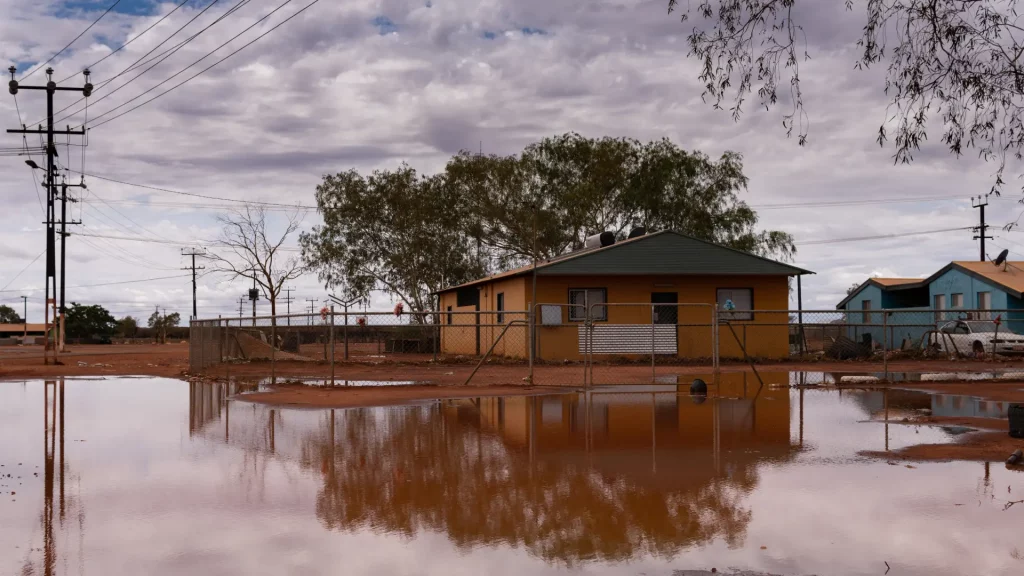
These risks fall especially heavily on rural, northern, and Indigenous communities. Longstanding infrastructure gaps and historical underinvestment have left many of these communities more exposed and less equipped to recover. First Nations communities are disproportionately affected by flooding, often because flood-protection infrastructure is inadequate or broader infrastructure deficits remain unresolved. Seasonal flooding continues to put communities across the country at risk.
What Needs to Change
If flood risk starts upstream, then solutions must start there too. That means going beyond emergency response, and investing earlier in prevention, resilience and better land-use decisions. It means protecting wetlands and floodplains, strengthening watershed management, improving flood mapping, upgrading critical infrastructure and supporting nature-based solutions.
It also means changing our approach. We cannot keep treating water as an abundant resource and flooding as a temporary disruption. That includes integrating Indigenous knowledge and listening to communities that have long understood how water moves, where it needs space, and what happens when that reality is ignored.
The Opportunity for Foundations
Foundations working in housing, health, economic resilience, infrastructure, and community wellbeing are already working downstream of water. The opportunity now is to act further upstream, where the leverage is deeper.
Canada has the knowledge and tools to reduce water-driven financial risk. What is needed now is coordination, scale, and early investment. Through the Canada Water Security Funders Group, foundations have an opportunity to help catalyze the solutions, partnerships, and investment needed to strengthen resilience across communities. This challenge is solvable, but only with the right coordination, capital, and commitment.
From Water Abundance to Water Security
Having water is not the same as having water security. Canada is learning that lesson through flooding. Without water security, communities cannot count on housing security, insurance stability, infrastructure resilience, or long-term financial stability.
And that is the deeper lesson flooding is teaching us. Water is not a background variable in financial systems. It is a climate risk that has become an economic risk, a community risk, and a financial equity risk all at once. What comes next depends on investing early, acting upstream, and treating water security as the foundation of resilient communities.
References
- Canadian Climate Institute / Shared Value Solutions. Indigenous Housing and Climate Resilience Report. January 15, 2024. https://climateinstitute.ca/wp-content/uploads/2024/11/CCI_IndigenousHousingAndClimateResilience.pdf
- Canadian Climate Institute. FACT SHEET: Climate change and flooding. September 4, 2024. https://climateinstitute.ca/news/fact-sheet-climate-change-and-flooding/
- Canadian Climate Institute. Massive investment needed to ready Canada's infrastructure for climate change: Report. September 29, 2021. https://climateinstitute.ca/news/massive-investment-needed-to-ready-canadas-infrastructure-for-climate-change-report/
- Federation of Canadian Municipalities. Investing in Canada's future: The cost of climate adaptation. https://fcm.ca/en/resources/investing-in-canadas-future
- Government of Canada. Government of Canada Adaptation Action Plan. https://www.canada.ca/en/services/environment/weather/climatechange/climate-plan/national-adaptation-strategy/action-plan.html
- Insurance Bureau of Canada. Severe weather-related insured losses in Canada exceed $2.4 billion in 2025. https://www.ibc.ca/news-insights/news/severe-weather-related-insured-losses-in-canada-exceed-2-4-billion-in-2025
- The Narwhal. 3 years, 2 deadly atmospheric rivers. Is B.C. ready for the next one? https://thenarwhal.ca/bc-flood-sumas-lake/
- The Narwhal. B.C.'s flooding, again — here's what to know. https://thenarwhal.ca/bc-atmospheric-river-flooding-risk-2026/