


Canada’s water story is changing fast. Drought, flooding, and extreme weather events are putting more pressure on the systems that help bring food to our tables. For farmers, it can mean watching their crops fail after months of work, struggling to secure enough water for livestock, and facing rising costs.
These pressures are now also being felt across fisheries, rural communities, food supply chains, and household grocery bills.
Canada holds nearly 20% of the world’s freshwater reserves, yet a significant portion is non-renewable, difficult to access, or unsuitable for use. At the same time, 60% of Canada’s renewable water flows North, away from key farming regions, while crop production remains deeply dependent on predictable rainfall.
The Growing Challenge of Unpredictable Rainfall
Less than 2% of Canadian farmland uses irrigation, making it highly vulnerable when rainfall becomes less reliable. It means many Canadian farms depend on rain arriving at the right time during the growing season. In agriculture, timing becomes just as important as total rainfall.
Too little or too much water disrupts farming. A wet spring can delay seeding. A dry summer can reduce yields. Heavy rain near harvest can damage crops. Agriculture needs reliable water, in the right place, at the right time.
The Prairies as an Example
In 2021, the Prairies offered a clear example of how quickly water instability can become a food system shock. After months of low precipitation and extreme heat, severe to exceptional drought spread across Western Canada. In the Prairies, crop yields fell by 30 to 40%. Farmers faced poor pasture conditions, livestock feed and water shortages, and wildfire risks that threatened farming communities.
In Saskatchewan, crop production in the province fell by a record 47% compared with the previous year. Oat and dry pea harvests were cut in half, while wheat, canola, lentil, and barley production each decreased by about 40%. Saskatchewan was also the only province whose economy contracted that year, contributing to a food system shock.
Healthy Soil Helps Manage Water
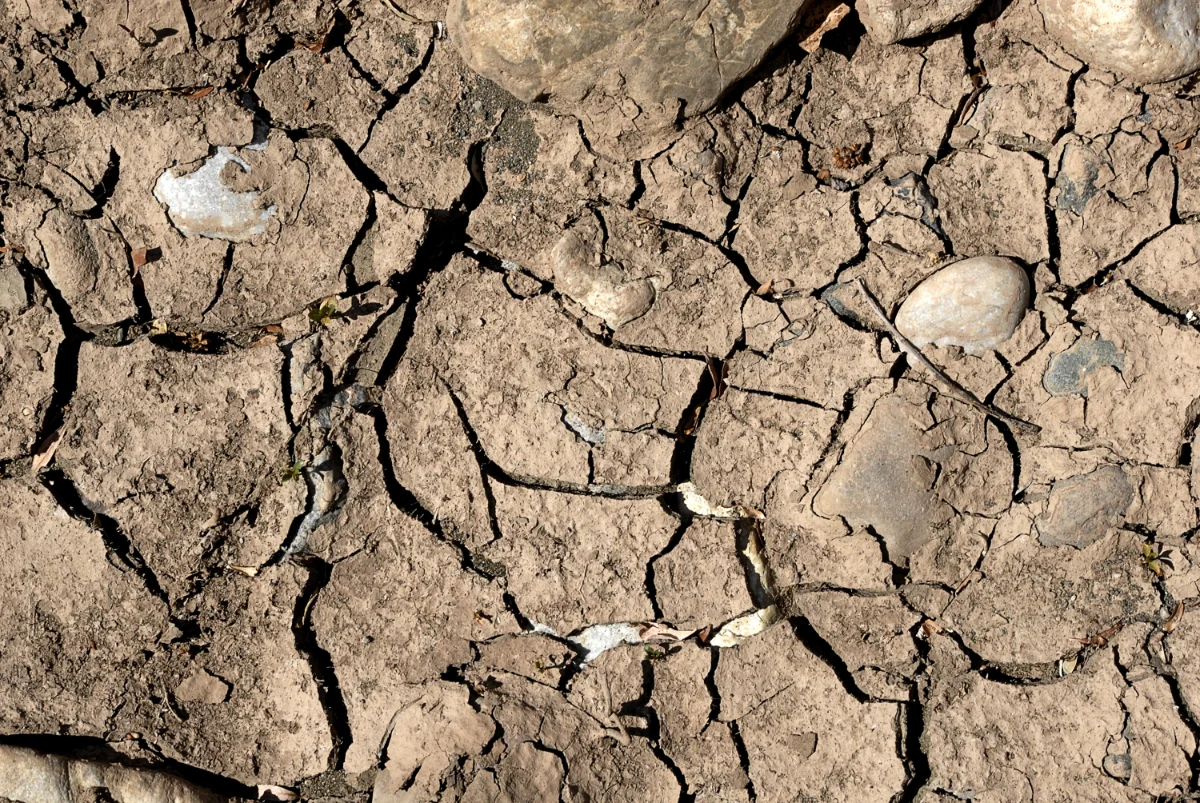
In agriculture, soil is part of the water system. Healthy soil acts like a sponge. It can absorb rainfall, hold moisture during dry periods, and reduce runoff during heavy rain. Agriculture depends on these natural functions for long-term food production. Therefore, when soil is degraded or too dry and followed by heavy rain, it behaves differently. Water runs off faster, erosion increases, and both drought and flooding generate worse impacts.
Water resilience in agriculture is thus also about land stewardship. Protecting soil health, wetlands, biodiversity, and natural systems helps farms manage extreme weather.
Water Security is Food Security
Water is one of the most important inputs in Canada’s food system. Beyond soil health, it supports crops, livestock, fisheries, processing, transportation, and the ecosystems that make food production possible.
Yet agriculture is being forced to operate in an unpredictable climate. This growing uncertainty affects food systems in several ways:
- Crop production depends on rainfall that is becoming more erratic
- Irrigation systems are facing higher demand during peak growing periods
- Livestock producers depend on reliable water sources for animals and feed production
- Fisheries and wild food systems depend on healthy aquatic ecosystems
Without water stability, there is no food stability. When water arrives too late, too quickly, or not at all, the impacts move through the entire food system.
Drought is Putting Canada’s Food System Under Stress
Drought is one of the clearest ways water instability appears in agriculture.
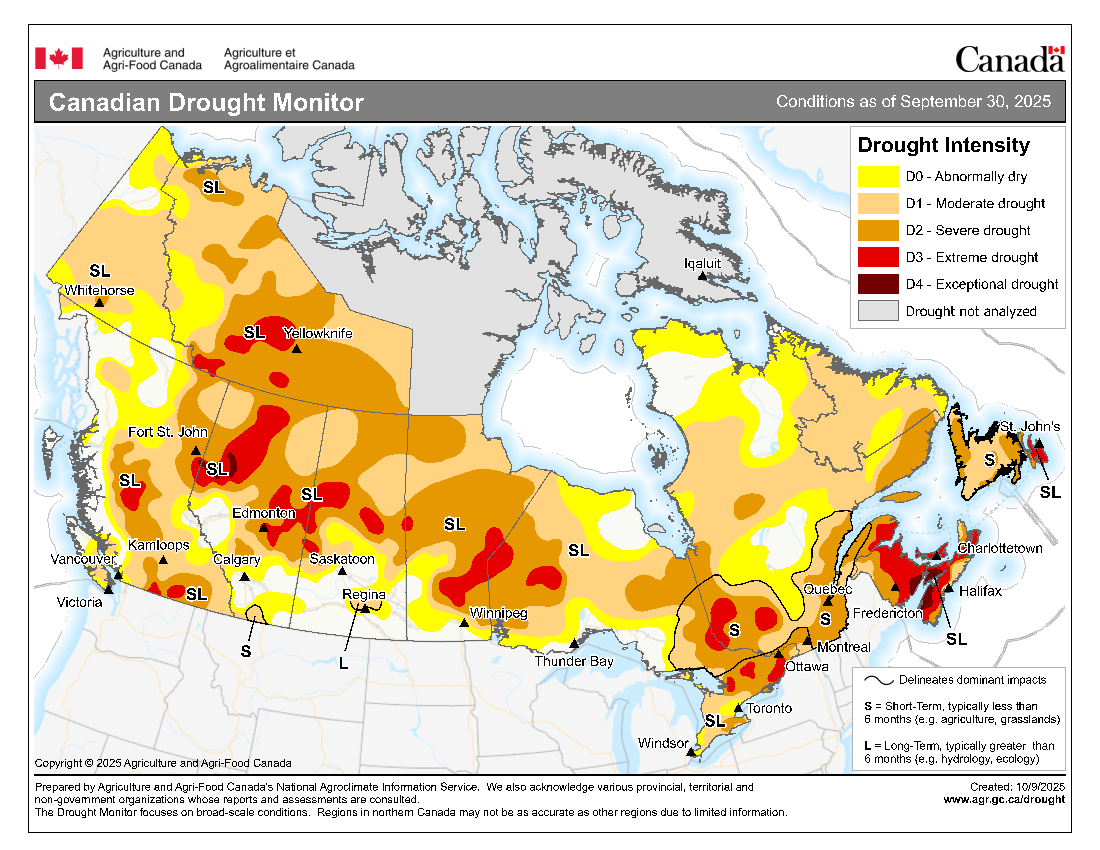
In 2025, Agriculture and Agri-Food Canada reported that drought remained the most significant climate-related agricultural risk across the country. As of September, 85% of Canada’s agricultural landscape experienced drought, including 67% in moderate to extreme drought.
These conditions affect far beyond crops in the field. Droughts reduce yields, increase feed costs and limit water supplies. They fuel wildfires by drying out soils and vegetation. When plants and trees lose moisture or die, they add more fuel to landscapes, making fires easier to ignite and harder to control.
The Financial Pressure on Farmers
The economic consequences are already visible. According to a UPA survey, 42% of farm businesses reported a net loss, while 52% were at risk of failing to meet their financial obligations. For next-generation farms, that number rose to 67%.
Drought has increased insurance pressure across the sector. The Canadian Climate Institute notes that drought has contributed to a 450% increase in crop insurance payments in Canada, rising from $890 million in 2018 to $4.9 billion in 2022.
When water becomes unreliable, farmers are often the first to feel the pressure. But they are not the only ones affected. The entire food system is disrupted.
What Happens When Water Systems Fail
When water instability moves through the food system, it becomes a direct driver of food prices, threatening farmers’ livelihoods, and increasing households’ cost of living. It determines whether food can be produced reliably, moved efficiently, and kept affordable.
When severe weather events occur and put pressure on already stressed water systems, the impacts move quickly from farm to table:
- Reduced crop yields put pressure on supply
- Higher production costs contribute to higher food prices
- Damaged infrastructure disrupts transportation, processing, and distribution
- Stress on aquatic ecosystems affects fisheries, wild food sources, and biodiversity
For households, these pressures arrive in a familiar place: the grocery bill. Food insecurity is already a major challenge in Canada. In 2025, 24% of people in Canada lived in a food-insecure household, representing approximately 9.8 million people.
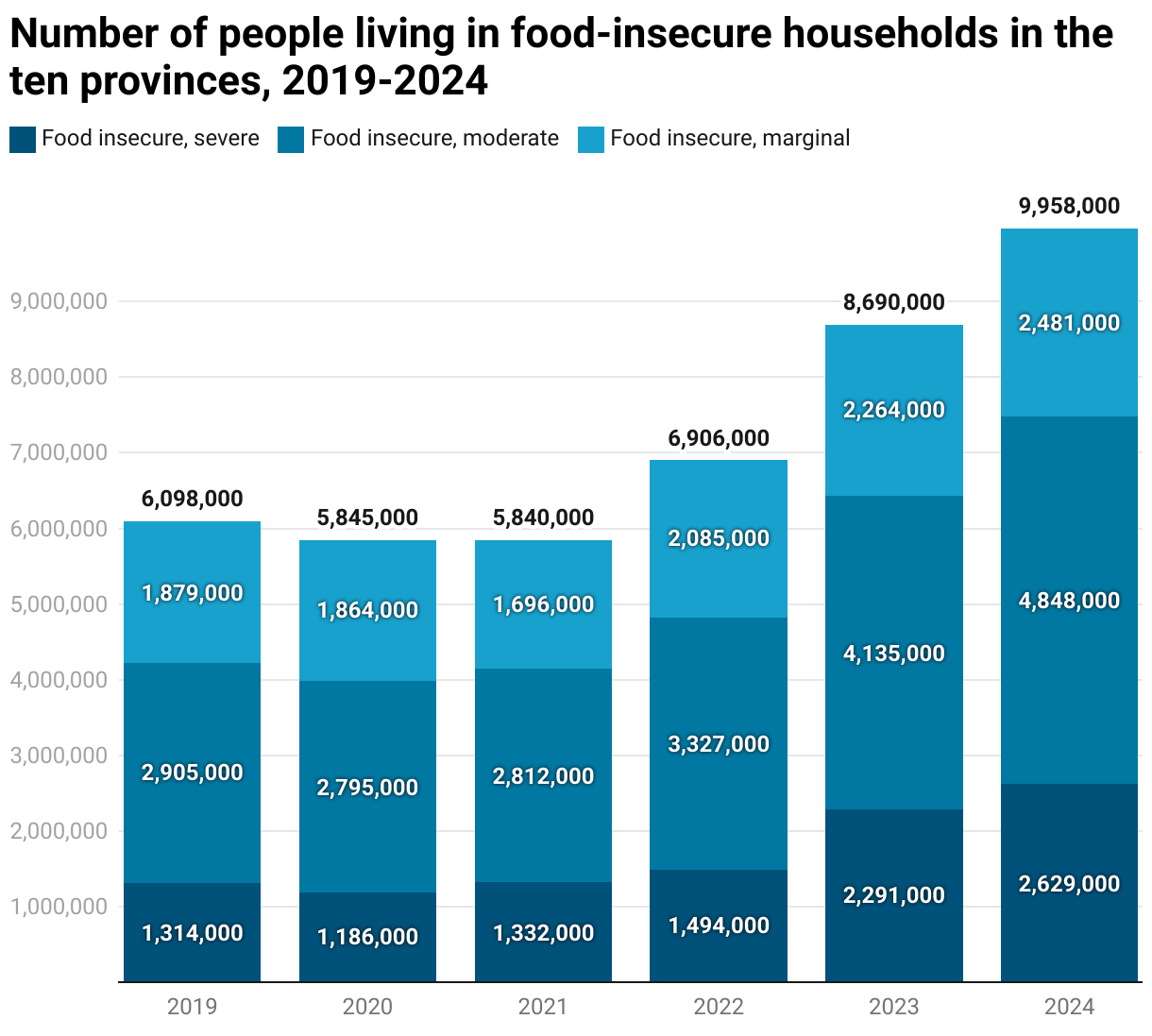
Chart: PROOF - Source: Statistics Canada Table 13-10-0834-01
Opportunity for Foundations
Canada has the knowledge and innovation needed to respond to water instability in agriculture. What is needed now is scale, coordination, and capital.
Targeted investment can help accelerate innovation, including precision agriculture, water-efficient technologies, drought monitoring, early warning systems, and tools that help farmers make better decisions with better data. It can also help connect sectors that too often work separately: water, agriculture, food security, climate resilience and farmer livelihoods.
Through the Canada Water Security Funders Group, foundations are uniquely positioned to help strengthen awareness, support collaboration, and contribute to solutions that reduce risk before communities are forced to respond to a crisis.
A Food System Built for the Future
Canada’s food system depends on water that is reliable, and that appears in the right place, at the right time. Having water is not the same as having water security. Without water security, Canada cannot expect long-term food security, stable rural livelihoods, resilient supply chains, or affordable, local food for households.
In agriculture, water is the foundation for how we grow, produce, distribute, and access food. If unstable, it is felt through farms, ecosystems, grocery stores, and homes. Protecting water means protecting the people, places, and systems that make food possible.
References
- Agriculture and Agri-Food Canada. A Sustainable Agriculture Strategy for Canada. https://agriculture.canada.ca/en/document
- Agriculture and Agri-Food Canada. National Agroclimate Risk Report. October 22, 2025. https://agriculture.canada.ca/en/agricultural-production/weather/national-agroclimate-risk-report
- Canadian Climate Institute. Fact Sheet: Climate Change and Drought. August 18, 2025. https://climateinstitute.ca/news/fact-sheet-climate-change-and-drought/
- CBC News. Much of Atlantic Region Officially Suffering “Extreme Drought,” Agriculture Canada Confirms. September 12, 2025. https://www.cbc.ca/lite/story/1.7632465
- L’Union des producteurs agricoles. Survey Results. https://www.upa.qc.ca/en/consommateur/communication-center/special-features/the-farming-crisis/resultats-des-sondages
- PROOF, University of Toronto. New Data on Household Food Insecurity in 2024. May 5, 2025. https://proof.utoronto.ca/2025/new-data-on-household-food-insecurity-in-2024/
- Statistics Canada. Behind the Numbers: What’s Causing Growth in Food Prices. November 16, 2022. https://www150.statcan.gc.ca/n1/pub/62f0014m/62f0014m2022014-eng.htm#a3
- Statistics Canada. Drought Drags Down Saskatchewan Economy in 2021. September 23, 2022. https://www.statcan.gc.ca/o1/en/plus/1852-drought-drags-down-saskatchewan-economy-2021