3 Actions To Implement Better Management of Establishments in the Health Sector of Quebec (4/5)
By FDGB,

If you have been following us for some time, you already know that for many years, the de Gaspé Beaubien Foundation has been actively contributing to the improvement of the Quebec Health Care System, in collaboration with the Health and Social Services Center Des Sommets (CSSS des Sommets).
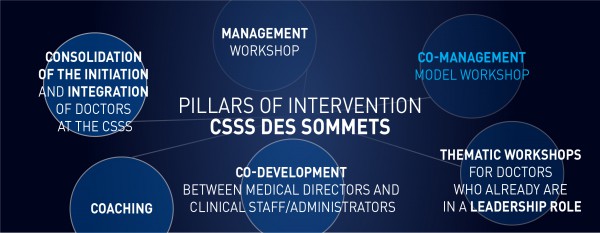
In order to achieve these improvements, we have put in place several pillars  which stand at the heart of the CSSS des Sommets. These have already been presented in previous articles. . You can consult them by clicking on the following links:
Pillar #1 – Initiation and Integration of Doctors
Pillar # 2 – Management Workshops

Co-management as an Intervention Model

A large part of our joint venture with the CSSS des Sommets revolves around the concept of co-management. This management model is crucial for hospitals, the CLSC and care centres where doctors AND managers are called upon to work together and to share their knowledge.
Co-management can be seen as a teamwork model between the medical leader and the clinical and administrative leaders to ensure optimal coordination and high-level collaboration in planning and organizing the allocated resources.  Or, in identifying needs as well as solving problems, overcoming obstacles and in turn, facilitating decision-making with clinical, medical and administrative issues.” – Pierre Joron, CFC-Dolmen
This article focus is on the 3 pillars of intervention that are linked to co-management, which are already in place at the CSSS des Sommets. Their purpose is to lead to better management of health and social service establishments in Quebec.

Pillar #3: Co-management in Administrative Operations

For two years now, the directing committee of the CSSS des Sommets has included medical directors in its ranks. This participation of doctors promotes more enlightened exchanges, rich discussions and leads to decisions related to clinical issues that take into account strategic governance. Whether it is a question of orientation, administrative priorities, clinics or strategic planning, the decision-making process is a shared effort that includes contributions from both administrators and doctors.
This approach increases the achievability of the organizations objectives and the actions that follow within the overall organization that makes up the CSSS.

Pillar #4 – Co-development Between Medical Directors and Clinical Administrators

Co-development between medical directors and clinical administrators allows the directors to help each other through a structured approach of sharing and knowledge transfer.
The professional co-development group is a development approach for people who believe they can learn from one another in order to improve their practice.1
The 3 to 4 sessions that are held annually, sufficiently boost the level of confidence of directors, which has an immediate impact on both profitability and their work overall.

Pillar #5: Co-management Incentive Workshops

After management incentives, the co-management incentive workshops are the continued process of promoting leadership and accepting responsibility for doctors. This promotion of leadership begins during the initiation and integration (of doctors).
The doctors that work at the CSSS des Sommets,  many of whom could assume the management functions there, need to be supported. This workshop allows for apprenticeship and a transitional progression toward a co-management model. The advantages and potential pitfalls are reviewed as part of the workshop.
Following these workshops,  the proposed ideal conditions to put a co-management model in place include: regular planned meetings and the possibility of coaching and training. The objective at the end of the process is the creation of doctor/manager dyads.
Medical director: “It allows for bilateral comprehension of the issues. For the administrators: to understand the clinical issues, and for the clinicians, to understand the administrative and human resource issues.
Clinical and Administrator Director: “The more they are involved in management, the more they will understand the issues, the easier it will be to find an acceptable compromise, for both the doctors and the administrative issues.”

Conclusion: The Advantages of Co-management

  •  The capacity to act: calling on clinical expertise and on the influence of doctors.

If I had not had my co-manager to support me and to make doctors understand the issues that are important, we wouldn’t have been able to act.

  •  Mutual understanding: making doctors aware of the realities of management and vice-versa.

Co-management allows doctors and managers to learn about their respective realities. This is necessary if we want to achieve results in the interest of the patients.”

  •  Cohesion and complementarity around a common goal: caring for the clientele

It takes a team to make things move forward, to have quality care and to provide services. We could have picked a different name but in the end, it is still Co-management.”
In our next article on the CSSS des Sommets, we will introduce the coaching intervention pillar. Coaching allows those involved to act in the continuity of the incentive workshops in management and co-management for effective clinical and administrative dyads.
1  : Payette, A. et Champagne, C. (1997) Le groupe de codéveloppement professionnel, PUQ, p. 16
How entrepreneurial philanthropy helped the CSSS des Sommets (3/5): Incentive management workshops

By FDGB,

Here is the latest article from our series on the CSSS des Sommets!
CSSS des Sommets serie:
The collaboration between doctors and administrators: a relationship on the mend (1/5)
How entrepreneurial philanthropy helped the CSSS des Sommets (2/5): initiation of doctors
The objective: To help you discover a form of philanthropic intervention and implication in the health sector.
After addressing the consolidation of the initiation and integration of doctors, here is another article on incentive management workshops that will soon be presented to CSSS des Sommets’ doctors.

Understanding management

To put a medical co-management model in place in an establishment, the group intervening quickly realised that they first had to get the doctors interested in management. In fact, the implementation of our third pillar of intervention, the creation of dyads of medical managers, already required doctors to have a good understanding of the advantages of efficient management and teamwork. (Tweet this)
With these incentive workshops in management, the first goal is to make the doctors aware of the aspects of management involved in our health system and in the local CSSS organization.
We explain for example, where the medical component is positioned within the organizational structure of the health system, what the role of managers and doctors should be, how doctors can contribute to the better management of our system, etc.

Work tools

The workshop also provides useful tools to help doctors improve the way they manage themselves on a daily basis:
– Better understanding of management issues. Role and qualities of a good manager.
– Definition and discussion around the different medical committees in place at the CSSS des Sommets.
– Presentation of management tools for individual and group meetings.
– Training for facilitating a meeting.
The purpose of all this is to demystify the administrative aspect and to make it gratifying and attractive for doctors who are first and foremost clinicians.
Using a participatory presentation style, we will tackle a variety of subjects: reflecting on the continuity of services in the CSSS, the 6 leadership styles according to Goleman or the 10 principles for managing change.
By selecting competencies relevant to management, human resources or leadership, the doctors are made aware of the importance of management and as a result, of the co-management model that is so crucial.
Our next article will present our third intervention pillar on the building of medical-manager dyads. We will explore how these dyads will help improve the efficiency of a health establishment.

Do you think it’s important to raise awareness among clinicians about the importance of management?

How entrepreneurial philanthropy helped the CSSS des Sommets (2/5): initiation of doctors

By FDGB,

In a previous article we presented the implication and partnership of the de Gaspé Beaubien Foundation and the CSSS des Sommets. We use the word “implication” because our philanthropic approach consists of being a social catalyst rather than a simple donator.
Most importantly, we spoke about the reasons for our engagement that began 7 years ago: to contribute and help toward the improvement of the Quebec health system.
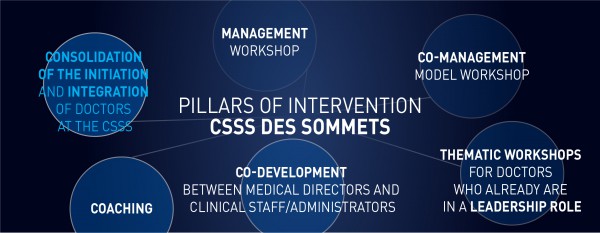
We will now present to you in detail the first pillar in the implementation of the co-management model at the CSSS des Sommets: Consolidation of the initiation and integration of doctors at the CSSS.

Doctors: practitioners, but also managers

Doctors are paid when they engage in a medical procedure on a patient. But for a medical center to function properly, doctors/practitioners should provide their input, contribution and opinion on the decision-making process and on the current management of the establishment. These facts formed the basis for our reflection on the challenges that the CSSS des Sommets had to face.
One of the solutions proposed by the CSSS des Sommets:  the co-management approach to medicine. This model introduces dyads within the medical teams:  a doctor is paired with a manager within the organization that performs horizontal functions (program director) and vertical functions (departments and services).
The result? The doctors are more exposed to management issues, and they can influence and interact on topics that matter to them. (We will address the dyads in more detail in future publications.)
Together with the CSSS, our first step was to focus on future doctors, knowing our environment and the co-management approach that characterizes it. The next obvious action to us was to consolidate the initiation and integration of doctors.

The Initiation, an Essential Step

Research in the field of human resources shows that the greeting and initiation of new employees are just as important as the selection process. This step allows for expectations to be managed and ensures a smooth transition for both the new employee and the organization. In the end, it is the best time to share and instill the values of the organization.
Moreover, the quality of the integration of the new employee does not rest solely on how they adapt to their new position, but also on their understanding of the organizational challenges that relate to it.
At the CSSS des Sommets, it is necessary to share information on the population-based approach, the program approach, as well as the co-management approach to medicine.

Preparing for the arrival of a new employee

A welcome program already existed for doctors, but needed to be backed by an up-to-date documentation and an optimized process for integration. For the last two years, the arrival of new doctors, both generalists and specialists, would become our best way to revise the welcome program.
The program contains a large part of essential information for doctors, but also –and most importantly- several steps, in which the CSSS made sure the person was visiting useful places, and meeting key actors. Also offered to arriving doctors are:
– A detailed document on the establishment, its mission, its values, its functions, etc.
– An integration period in which the doctor visits different services and installations of the CSSS
Professional orientation, in order for the new employee to master their tasks and responsibilities and also make him/her autonomous.
– A follow-up of the welcome plan by the direction of HR
While encouraging a feeling of belonging and an understanding for the role of being a doctor at the CSSS, we also created some momentum towards the participation of doctors in the various activities that are in place to help improve the CSSS.
The future doctors who will be arriving this summer, are going to experiment with the program and give the CSSS their feedback.

What do you think of this solution put in place for welcoming new doctors into the organization? Do you think that this adequately promotes the co-management approach to medicine?

The Sainte-Justine Hospital overrun with hackers

By FDGB,

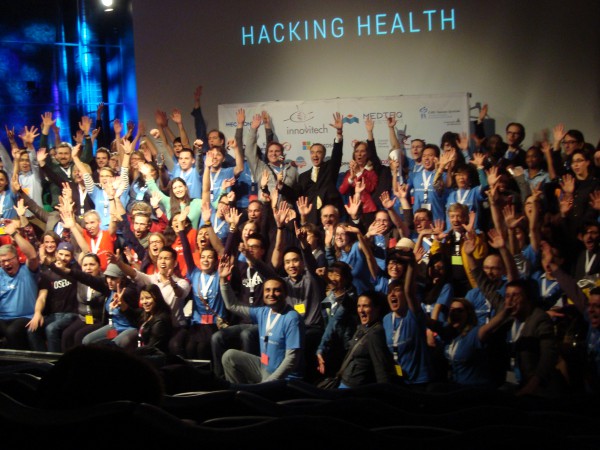
There is no doubt: the Hacking Health initiative that took place on February 21st, 22nd and 23rd at the Sainte-Justine Hospital was a true success! Aiming to facilitate the collaboration between designers, software developers and health professionals as well as to help resolve issues with the support of new technologies, the largest Hackathon in history led to the creation of 36 innovative projects.
Some of the projects included: a Google Maps application that helps parents orient themselves in the hospital. A Google Glasses’ application to reduce the risks during surgical operations.  And, an application that helps detect health problems among young children. The 300 participants submitted simple solutions to many of the reoccurring problems.
With excitement in his eyes, Fabrice Brunet, director at CHU Sainte-Justine promised that many of the projects will be realized.

“We will implement all ideas that have an added value for patients, families or for the teams and we will measure the effects,” he said.

The judges had the difficult task of naming a winner amongst the extraordinary teams that presented their projects which consisted of functional prototypes developed in only two days.

“We are overwhelmed by the quality of projects that were presented and by how quickly the teams were able to develop their applications”, commented Philippe de Gaspé Beaubien II, co-founder of the de Gaspé Beaubien Foundation and judge for the event.

Here is a list of some of the best projects:
The « Coup de cœur » Hacking Health was awarded to the creators of the ELMO project. This application allows parents to capture sound recordings of their child with speech problems and to send it directly to a speech pathologist. The project could help reduce by a third, the number of visits required before a pathologist can establish diagnosis.
The JUSTINE TIME project took the prize of Best Project for hospitals and the health system. This application proposed an automated task management system that optimizes time management for nursing staff and could reduce the time spent on managing administrative tasks by 50%.
The most innovative project and the “Kids Choice” was NEUROSCREEN. This application facilitates the diagnosis of autism by analyzing the face of a child.
In the “Best Project for Mother & Child” category, three projects shared first place:

  1. CARLO, a computerized dashboard allows mothers to take notes on the state of their sick child and to exchange this information with the medical staff.
  2. TINY TOT ON THE GO – a digital version of a baby book for new parents with the option to search for information.
  3. MISSION KODA – a game that allows kids to follow the progress of their long-term treatment in a playful manner.

With the success of the Sainte-Justine Hospital Hackathon, a variety of projects, achievements and events, implicating both health professionals working in the field and the specialists in new technologies, will soon see the light of day.
After this stimulating weekend, the de Gaspé Beaubien Foundation sees great potential in the Hacking Health initiative where important solutions can be found for some of its other projects.

«We are considering the creation of a partnership with Hacking Health to apply the ideas of our River Mission project, which greatly needs simple solutions to facilitate the communication and collaboration of different actors,” said Dominique Monchamp, the director of the Foundation.

Hackers Helping Healthcare, Is It Possible?

By FDGB,

New technologies can solve certain problems in the healthcare system, but the gap between the different players is sometimes difficult to bridge. That is why the Hacking Health concept was initiated.
From February 21 to 23 a unique event will take place: Hacking Health at Sainte-Justine Hospital. Bringing together healthcare professionals, programmers, developers, designers, and marketing specialists, Hacking Health’s goal is to develop emerging applications to serve various issues related to healthcare.
A weekend of breaking down barriers, the event will allow hospital workers to reveal their everyday problems directly to programming and design teams. The ultimate goal: to connect professionals in the field by eliminating hierarchical distance in order to find rapid solutions to recurring problems.
“We thought that in bringing together people who know how to make apps with those who understand the needs of the healthcare system we could find solutions” states Chowdhury Jeeshan, medical resident and Hacking Health cofounder.
Attracted by the idea of innovation coming from the bottom up, the de Gaspé Beaubien Foundation decided to support this session of Hacking Health at Sainte-Justine Hospital.

“We believe that people on the ground level are in the best position to tell us about the challenges,” states Dominique Monchamp, Executive Director of the Foundation.

During the weekend, a delegation of the de Gaspé Beaubien Foundation will participate and  a member off the family will serve as a judge in the selection of promising projects. The objective of this new approach, based on entrepreneurial philanthropy, is to develop emerging innovative solutions that serve the communities.
“Our meeting with Luc Sirois, Hacking Health cofounder and organizer of the event, proved to be an eye-opener. We are seriously considering using this approach to benefit the social causes that we support at the Foundation either in the areas of water and families in business,” concluded Ms. Monchamp.
Although this is the first event of its kind happening at the Sainte-Justine hospital, many Hacking Health events have taken place around the world. Among the technologies that have been developed are: online systems for clinical appointments and an app to help post-op prostate patients. The app alone will help reduce by 70% the time doctors spend responding to the concerns of their post-op patients.
To find out more on the apps that will be considered by the jury and for complete details on the event, follow us on this blog and on our social media networks using #hhmtl2014 and #hackinghealth.
For more information: http://www.hackinghealth.ca

We should tell them : a Mission Riviere entire film

By FDGB,

During the summer of 2013, we travelled the Ottawa River to raise the communities’ awareness about the importance of  the  health of the Ottawa River as well as the respect of its rights. This initiative was started by the fourth generation of the family of the de Gaspé Beaubien Foundation and was realized in collaboration with Ottawa Riverkeeper and the intrepid Alexandra Cousteau (granddaughter of Jacques Cousteau) of Blue Legacy.
The River Mission project officially kicked off on August 4, 2013 when the children – Philippe, Louis-Alexandre et Aidan – joined by a team of specialists, began their canoe journey on the Ottawa River to meet the residents and supporters living along its shore and to conduct water tests in order to gain a better understanding of the river.

The Blue Legacy expedition

Alexandra Cousteau and the Blue Legacy expedition team, collected important data during their cinematic 10-day journey in the fall of 2013. From this expedition, three documentaries were produced and will be presented in September 2014. They will cover the following topics: the water quality of the Ottawa River, the impact of dams on the river and the governance of the river.

Together, let’s help the Ottawa River!

The collaboration between doctors and administrators: a relationship on the mend (1/5)

By FDGB,

This is the first  in a series of five articles that will showcase our involvement with the CSSS des Sommets. Much more than just a pilot project, this philanthropic experience within the CSSS des Sommets was achieved through reflection and strong teamwork while dealing with specific issues and trying to find solutions for our healthcare system.
Our dream is simple: to contribute to the improvement of the healthcare system in Quebec. We believe this can be achieved through solid partnerships with experienced experts. There are many complex issues involved but we believe that by emphasizing the advantages of a co-management approach, this dream can become a reality. As we present what the CSSS des Sommets team accomplished with the support of the Foundation and the collaboration of many experts, we hope to convince and stimulate the participation of doctors and administrators in a co-management approach to medicine.

Our Foundation

The De Gaspé Beaubien Foundation helps, encourages and supports individuals, families and the organizations that contribute to the sustainable social prosperity within their community. This is done through 5 areas of influence:

Our collaboration with the CSSS des Sommets was linked to the objective of improving the healthcare system. We chose to invest significantly in the CSSS des Sommets because we were inspired by the organization’s profound desire to progress, innovate and find solutions.

The problem with the healthcare system in Quebec

After many years of intervention in the healthcare system, it is our humble opinion that our system is a good one and has great potential. It allows for universal access to basic and complex health care needs, the people that work in the system are competent, devoted and engaged, and finally, the doctors and administrators feel genuinely involved and work hard to find the best practice solutions. While our healthcare system is a good one,  it is not perfect; there are some significant weaknesses including fatigue among hospital staff, timely access to care, the shortage of doctors in certain specialties, the constant rise of costs, etc.
One of the important problems we have observed through our work with the teams at the CSSS des Sommets is the discrepancy between the monetary incentives of doctors and the rest of the medical staff. The medical personnel are paid a fixed annual salary while the doctors are paid based on their medical activity.

Doctors vs. the rest of the medical system

Doctors are paid only when they engage in a medical procedure on a patient. For a medical center to function properly, doctors/practitioners  need to do much more, including providing input on the decision-making process a as well as  on the current management of the establishment. This aspect is essential in our opinion, however, it is not always the case; most doctors are not obligated to participate in meetings or be involved in the administrative and decision-making processes. Moreover, there are very few clinical representatives in the upper management team of the establishment. To be clear: nobody is to blame in this situation. Each party is doing the best that they can under the circumstances but we must not ignore the challenges of a career in the health care field.

The co-management approach to medicine

Believing in the potential for collaboration between doctors and administrators, the CSSS des Sommets, in partnership with the De Gaspé Beaubien Foundation, decided to put in place a model for medical co-management. This model introduces dyads within the medical teams such as a doctor paired with a manager within the organization that performs both horizontal functions (program director) and vertical functions (departments and services).
Establishing this work method is not an easy task. The following 6 pillars were used  to create the model that is implemented in the CSSS des Sommets.

The next articles in the series will focus on how our 6 means of intervention were established and the results that were achieved. We are already looking forward to hearing your comments and to start a dialogue on this topic!

Other than the co-management approach, do you know of any ways to improve certain aspects of our medical system? Do you agree with the involvement of philanthropists in implementing solutions and innovations in our healthcare system?

Look for our next article which will focus on the first pillar of the co-management model at CSSS des Sommets:
The initiation and integration of doctors at the CSSS.

Quebec’s wetlands are at risk. Is this a serious issue?

By FDGB,

Wetlands: Environmental Regulators

Connecting land and water, the soil found in a wetland is more or less solid. Although wetland areas are not considered great attractions, they are the basis for our ecosystem and play an integral role in the maintenance of a healthy environment. The preservation of water has a direct link with wetlands, which is why we have taken the time to think about the above question.
The interactions between the plants, soil, microorganisms and animals in these areas make wetlands one of the most productive ecosystems on earth.  These areas:

  • Nourish groundwater;
  • Reduce the damages related to flooding by absorbing precipitation;
  • Reduce greenhouse gas emission as they sequester carbon;
  • Improve water quality due to their capacity to filter sediment;
  • Contribute to the biodiversity by sheltering half of the threatened or vulnerable species in Quebec.
  • Are a source of food, vegetable fibres, genetic resources, biochemical products, natural medicines and pharmaceutical products

Spanning over 12% of Quebec’s surface area, the wetlands of Quebec are more and more threatened, particularly by real estate development and agriculture activities.

7 researchers are on the case

To counter the destruction of these areas that regulate our ecosystem, the Quebec Government asked 7 scientists from the Quebec Center for Biodiversity Science to look into the matter and to recommend specific actions to protect the wetlands.
After two years of research, the scientists presented their findings in a report published last April.
The report shed some light on the lack of follow up in ensuring the mitigation, compensation and restructuring of wetlands and it announced that 99% of damaged wetlands in Quebec can not be restored.
This means that only 1% of damaged wetlands were restored in a sustainable way. This alarming statistic can be explained by the fact that “the wetlands have a real yet intangible economic value, meaning their value does not compare to the economic value of products and services that come from their destruction.”
After creating a precise map of the wetlands in Quebec and their current state, the researchers concluded that the St-Lawrence lowlands suffered the most over the last few years and would be particularly at risk in the years to come.
As such, they issued precise recommendations in order to achieve the ambitious objective of reaching a 0% net loss of these areas. In other words, no wetland would be destroyed or damaged without being completely restored afterwards.

New Policy: No Net Loss

The keys to success in this operation will be a thorough management, issuing of permits and strict regulation. In fact, forestry and agricultural activities currently do not need permits to work on wetlands. This should be regulated so that individuals and businesses that are impacting the wetlands are required to have a permit. This would create accountability for all and ensure the restoration of these areas.
Stakeholders should be educated on the importance of wetlands and how they function, so as to ensure that the right decisions are made.
Finally, the researchers suggest the creation of a committee of consultants to ensure one vision and efficient management of the wetlands in Quebec.

Do you think it is possible to protect the wetlands and to convince different actors of their importance?

Sources:
PELLERIN Stéphanie & POULIN Monique (April 2013). « Analyse de la situation des milieux humides au Québec et recommandations à des fins de conservation et de gestion durable, rapport final », 104 p.
DÉVELOPPEMENT DURABLE, ENVIRONNEMENT ET PARC (July 2012). « Les milieux humides et l’autorisation environnementale », 41 p.

What are the characteristics of the best patrons?

By FDGB,

On November 15, National Philanthropy Day, Hilary Pearson, President of Philanthropic Foundations Canada, gave a heartfelt talk in Quebec City on the state of philanthropy in Canada. Below in an excerpt of her talk that we wanted to quote:

“ What are the characteristics of the best patrons?

The best patrons are always curious. They want to know not only what an organization will do with their gift, but also why they prefer one strategy over another. More and more donors, especially major donors, want to know how their time and money will make a difference to the community. More importantly, what is the most effective type of intervention in terms of time, resources and energy, for ensuring a lasting impact?
And they want evidence. They want to know what works. They know, for instance, that you cannot say that strategy A is better than strategy B without analysing the data. That is why many charities work so hard to collect the data and solid evidence needed to secure donor support.

In the end, the best patrons think hard about the impact of their gift.

Evidence and impact go hand in hand; if you have supporting evidence, you can precisely describe the impact.  In the short term, we can quantify the impact by citing the number of young children who have access to preschool programs, for instance, or the number of families who go to public health clinics. Over the long term, we can measure the impact in terms of societal benefits on a larger scale. In that case, the measure of the impact might be lower dropout rates in areas where young children are enrolled in preschool programs, or a drop in rates of chronic disease in neighbourhoods with public health clinics.

The more rigorous we are in describing the impact, the more compelling it is.

One of Canada’s largest family foundations, the Lucie et André Chagnon Foundation, is based right here in Quebec. The Chagnon Foundation’s mission is to prevent poverty by contributing to the educational success of young Quebecers. Mr. Chagnon and his family knew from the outset that they wanted to make a difference in this area. But they did not start out with all the answers. They were curious about both philanthropy and this exceedingly complex issue in which they wished to become involved. When starting out, the foundation asked many questions and found out about the most effective practices in this area from other philanthropists in Canada and the United States. The foundation also looked for evidence. Inspired by other philanthropic organizations, such as the J.W. McConnell Family Foundation and the Annie E. Casey Foundation in the United States, they came to the conclusion that community-based interventions were the most effective. They joined forces with the Quebec government to support local and regional mobilization in areas that are critical to educational success: early childhood development, healthy lifestyle habits and student retention. Through this extraordinary partnership, which will last 10 years and calls on the partners to donate $200 million to the cause, the Chagnon Foundation and the government are in a position to gather data and share the results of their ongoing projects.
At the other end of the spectrum, we have philanthropic families like the de Gaspé Beaubien Foundation in Montreal, which works at a smaller scale as compared to the Chagnon Foundation. But once again, this family of philanthropists has been particularly effective because of their curiosity and determination to make an impact. Eight years ago, they were asked to make a donation towards the purchase of medical equipment for a small hospital in the Laurentians. They were curious, and asked the hospital administrators what the institution’s most pressing issue was. It turned out that the hospital was in financial difficulty and was having trouble achieving its objectives, due in part to management and communication issues. The de Gaspé Beaubiens realized that they could be much more effective philanthropists by helping the hospital achieve its broader goals. Over a period of several years, they supported a process of dialogue, management and training of hospital professionals at all levels. They gathered evidence of the impact of their involvement through an assessment conducted by HEC Montreal. The de Gaspé Beaubien Foundation is now eager to share the lessons learned, and is disseminating the very positive results, with the ultimate goal of improving health care across Quebec using a model that has been shown to work.

And there are other curious, engaged philanthropists on the Montreal scene.

The Brian Bronfman Family Foundation are working to create a network of peacemakers, the Graham Boeckh Foundation are developing a new approach to preventive intervention for youth with mental illness, and the J. Armand Bombardier Foundation investigate the capacity of community organizations to manage – there are probably too many stories to tell, but I have seen and heard enough today to assure you that private philanthropy is indeed a critical catalyst in the growth and advancement of organizations and ideas.”

Post Alexandra Cousteau’s expedition feature

By FDGB,

It’s a sunny September afternoon and to the casual observer the Petawawa, a tributary of the Ottawa river, is beautiful and serene. Alexandra Cousteau, explorer, water advocate and granddaughter of Jacques Cousteau, is canoeing along it with 82-year old Algonquin elder Skip Ross. As their oars dip into the water, the afternoon sunlight glints off the water. She asks him about the Petawawa river of his youth. It’s a question un-heard of in this day and age. “Could you drink the water?” she asks. “We drank the water straight from the Petawawa River. As a matter of fact, when we were young that was my job: carrying the water”, he replies. “Nowadays, I wouldn’t drink any water that flows here; it’s not safe.”
Today over 1.5 million people call the Ottawa River watershed home and there are over 50 major dams along the Ottawa River’s main stem and tributaries. The river also supplies municipal drinking water and flushes away treated wastewater from 115 wastewater treatment plants along its length. Beach closures due to high E. Coli counts are routine along its length and populations of key species such as the American eel have crashed in a mere three generations as dams block their migration and stymie their reproductive cycles.
In short, as Alexandra Cousteau and the Blue Legacy crew discovered during their 2,400km long exploration of the Ottawa watershed, this is an oversubscribed river. It suffers from significant and compromising gaps in its governance, mostly due to the fact that one of its riverbanks is in Ontario, the other in Quebec and neither have a basin-wide management body or plan to consult. With no one in place to take responsibility for the river, those on the ground – such local residents who see environmental injustices go unpenalized and unenforced or parents who mourn yet another beach closure robbing their children of a day in the water – are left to fill the void and advocate for the river’s welfare.

The many faces of stewardship

Over the next several months, the three short documentaries that Alexandra Cousteau filmed for River Mission, a joint initiative of Blue Legacy International, Alexandra Cousteau’s water advocacy non-profit, the de Gaspé Beaubien Foundation and the Ottawa Riverkeeper, will be released. The first film addresses water quality issues on the river, the second explores the impacts dams have had on biodiversity and the third will address issues of governance across the watershed’s 200 jurisdictions. That said, there is a strong undercurrent throughout all of the films and that is the underlying passion that people have for the river and its welfare.
Whether it was the humble verve of “Les Amis du Ruisseau de la Brasserie” in Gatineau, who are fighting to restore a creek’s place in its community, or Riverwatcher Virginia MacLatchie’s commitment to seeing environmental laws enforced in her own backyard these waterways have many champions in the form of its stewards, many of whom Alexandra Cousteau interviewed during her 11-day expedition. “I really have a profound, very strong attachment to the rive”, Marc Godin, from Les Amis du Ruisseau de la Brasserie, told Alexandra Cousteau. “The river is the lungs, the oxygen source, of the region. It’s fundamental for me.”
Godin is far from alone in his views. Take for example the people of the town of Almonte who are fighting to save a rare softwood Maple wetland located on the Missis-sippi river, another Ottawa River tributary, from drowning. “This should be really celebrated and valued,” Mike O’Malley, Ottawa Riverwatcher for the Mississippi River, told the Blue Legacy crew as he toured them through the struggling wetland. “It’s accessible wilderness and I think that’s really worth fighting for.

“I want the water to be alive”

Time and time again, Alexandra and her crew met with everyday people like Godin or O’Malley who saw a waterway that needed a champion and joined in what was inevi-tably an uphill, albeit rewarding, struggle. “I think stewardship is really about getting actively involved in protecting the river”, says Ottawa Riverkeeper Meredith Brown. “That means when you see something that you don’t think is right you start asking questions.”
Today the Ottawa Riverkeeper has 57 Riverwatchers across the watershed and count-less other stewards that guard its welfare. “I think it’s the river that motivates them”, says Brown. “Some of them are motivated because they want their grandchildren to be able to eat the fish or swim safely in the river but I think it fundamentally stems from their love of the river.”
Back on the Petawawa river, Alexandra asks Skip Ross how he feels when he’s on the river. “I feel happy. It’s where I belong, that’s what my spirit says”, Ross replies. “I want the water to be alive, to have to fish in, to have the river wildlife in it”.