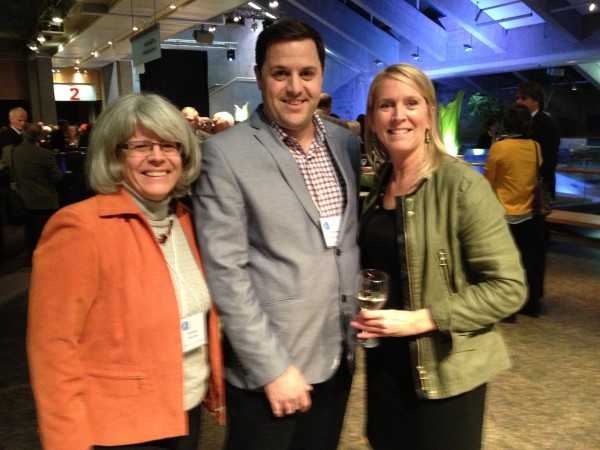
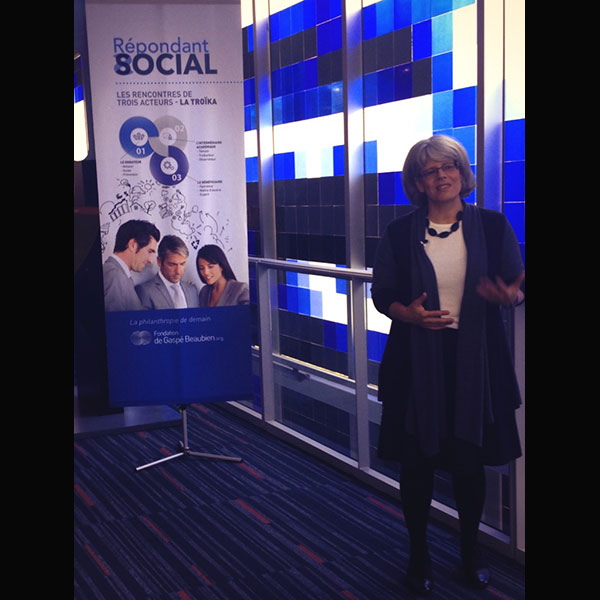
The very first summit on philanthropy in Quebec, the Sommet sur la culture philanthropique au Québec, was held on November 12 and 13 in Quebec City. Institut Mallet, which organized the event, brought together a large number of directors, administrators and other people active in the philanthropic community, and offered us the opportunity to reflect on the subject, discuss our ideas and share our best practices.
First, Institut Mallet merits a warm thank you for organizing the event and addressing what we feel was a real need for our community to meet. We hope that this first step toward dialogue is just the start of a much wider discussion.
The place of business and families in the world of philanthropy
With so many talented people in attendance, numerous topics were tackled during the two-day summit. Much of the discussion quickly turned to the question of philanthropy in the private sector.
When a company donates and contributes to social causes and thus becomes a major “funder” for a non-profit organization (NPO), is there a risk that the company will take control? Is it also possible that some social causes will be neglected in favour of others that are better for the company’s image?
At the De Gaspé Beaubien Foundation, we believe that companies, families and even individuals can act as a social catalyst for a variety of causes. In addition to providing financial support for a cause, a social catalyst informs, advises and alerts, while not having any formal authority. A social catalyst gets involved in processes that lead to results. Some fears may be legitimate, of course, and certain practices may be questioned. But private philanthropy still represents only a small portion of NPO funding, as evidenced by the existence of still-large government contributions and crowdfunding, which account for the bulk of funding for philanthropic works.
The changing face of volunteering?
A full discussion forum was launched on the notion of volunteerism. Given the younger members of the Summit, the word seems increasingly misused.
For many of our young people, the term volunteerism has become somewhat meaningless. They prefer to view volunteerism as action arising from civic engagement. Volunteerism should provide them with a means for good citizenship. More specifically, the younger generations are interested in civic engagement with a clear mission and concrete actions. They want to be invested in the process.
What is the meaning of volunteering? One thing is clear, for us and Quebec’s entire philanthropic community: no matter what you call it, being engaged and donating one’s time must continue to be significant elements in the advancement of social causes. Foundations and NPOs alike must tailor their volunteering assignments to the aspirations of the young and the not-so-young.
Philanthropy in Quebec
We also realized, with great pleasure, that there is a culture of philanthropy in Quebec. That culture, which historically grew out of the actions of the Church and the State, must find its direction in the multicultural society that we now live in.
It is at the crossroads of two prevailing models: the European vision of the welfare state with strong social responsibility, and the North American model of philanthrocapitalism with a strong presence of the private sector.
One thing we know for sure: much of the story of philanthropy in Quebec remains to be written, and the Gaspé Beaubien Foundation is more motivated than ever to meet the challenges of our time.
Press Review on River Mission Project.
Our objective with this project is to improve water quality of Ottawa River. To achieve this goal, we are working intimately with the population and our partners.
Here is a quick press review on Mission River project.
October 24 2013,
The de Gaspé Beaubien Foundation introduced the world to a new way of doing philanthropy work, the concept of the social catalyst, during the International Forum on Health that took place from October 22 to 24 in Montreal. The Forum was organized by the 5 University Health Centers of Quebec to provide an opportunity to promote the health sector and find new approaches to improve health care and services offered to the population.
The Troïka
Yves Lachapelle, General Director of the CSSS des Sommets, Philippe de Gaspé Beaubien II, creator of the de Gaspé Beaubien Foundation and Alain Rondeau, Associate Director of the Pôle Santé-HEC Montréal joined forces to explain how they came to develop the idea of the Social Catalyst through working together to help improve the structure and operations of the CSSS. “A good social catalyst advises, counsels and warns without having authority…without laying blame or giving criticism”, said Philippe de Gaspé Beaubien II during the Foundation’s workshop.
The concept
The concept of the Social Catalyst includes several innovative features, describing the merging of three actors as well as guiding principals to help orient their actions and ensure the desired social impact. The model stems from the idea that the Foundation does more than invest by taking a risk, it accepts to play the role of a representative of a society in order to support current projects that will improve the system and the community in which it exists. The members of the Foundation created a unique way to intervene that generates a social engagement from the beneficiary.
The Foundation’s ultimate goal is to inspire and mobilize other families and community leaders by encouraging them to get personally involved in effecting change. It believes in the potential of social innovation and hopes to be the example for other groups that wish to get directly involved in their community. The Foundation will continue to share and develop the idea of a Social Catalyst to help other organizations benefit from this form of philanthropy.
For more information on the project click here: http://ancien.fondationdegaspebeaubien.org/en/initiatives/improving-the-healthcare-system
October 8, 2013.
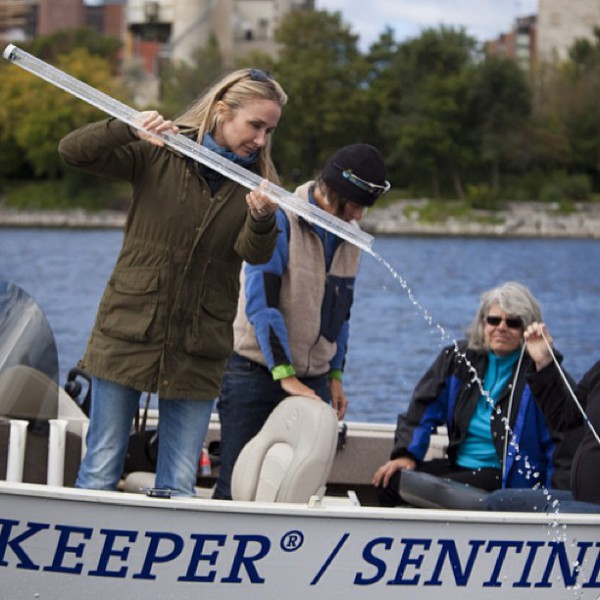
” Since arriving in Canada on September 11th to film three documentaries about the Ottawa river as part of River Mission, a joint initiative between Ottawa Riverkeeper, Blue Legacy International, and the de Gaspe Beaubien Foundation, I have kayaked, whitewater rafted and canoed on the river. As the source of the region’s tap water, I have drunk from the river and seen firsthand the watershed’s sewage plants as they clean and return water to the river.
As closely as I’ve gotten to know the Ottawa River during this expedition, I have gotten to know the people that are its champions even better – people like Ottawa Riverkeeper Meredith Brown, Ambroise Lycke, director of the Temiscamingue watershed, and Algonquin elder Skip Ross, all of whom fight to give this river a voice.
While we’ve borne witness to stories of empowered and impassioned individuals advocating for the river, we have also discovered there is a dramatic lack of accessible information and technology tools to support public action and understanding of the state of our water.
All that I have seen and heard here truly underscores the importance of knowing the state of our water – is it safe to swim in, can we fish in it, can we drink it. Information about water quality is the most critical tool we have to empower people to reclaim and restore their water. And yet, time after time, I see how hard it is for people to obtain and make sense of that information.
Ultimately this is a river that belongs to the communities of people that enjoy and rely upon it every day. Hearing about their concerns for the river and their visions of a better future has truly reinforced my belief that we are all stewards of the quality of our own water. But to bring about the change we seek, we need the right tools, technology, innovation, access to water quality information, public accountability and openness.
Water advocacy on every level starts with one question: How well do you know the state of your water? “
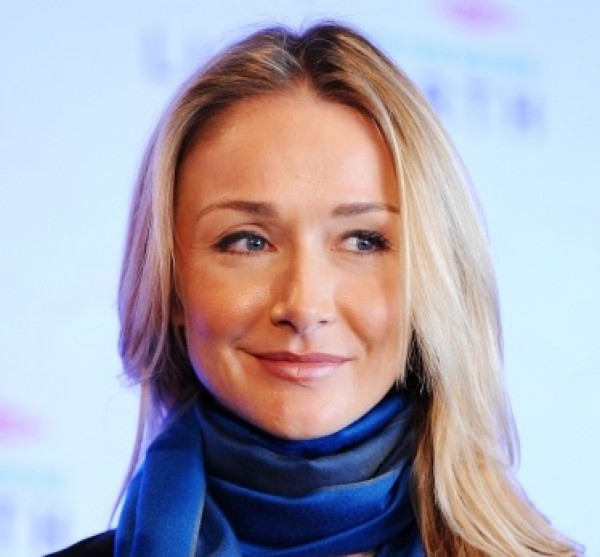
Gatineau, September 23, 2013 – Alexandra Cousteau and her Blue Legacy expedition team have racked up an impressive tally of exploration and engagement during their 13-day filmmaking trip to the Ottawa River watershed, which wrapped up on Sunday September 22nd.
The granddaughter of undersea explorer Jacques-Yves Cousteau has canoed, kayaked and whitewater rafted the river’s water. She and her crew have also conducted 43 interviews — throughout local communities and the people of Québec — and travelled 2,396 km in their mission so far.
“Ultimately this is a river that belongs to the community and being able to hear the community’s voice, their hopes and dreams, and concerns for the river and how they envision it for the future is the most powerful statement of what this river will ultimately become“, says Alexandra Cousteau.
Alexandra Cousteau and her film crew arrived in Ottawa on September 11th to shoot three short documentaries on the Ottawa River:
– one about quality of the water in the river
– one on the impact of dams on biodiversity
– one on the impact of a lack of joint governance on the river.
Champions and challenges
The films are part of River Mission, a joint initiative of Blue Legacy International, Alexandra Cousteau’s water awareness non-profit, the de Gaspé Beaubien Foundation and Ottawa Riverkeeper.
In addition to more personal highlights such as canoeing along one of Ottawa’s tributaries with Skip Ross, an Algonquin elder, and hearing firsthand from him about an Ottawa River that one could drink out of 70 years ago, Alexandra Cousteau enjoyed the river’s adrenalin-charged thrills as well. “White water rafting was a great way to experience the water and be in a place that was representative of the way the Ottawa River used to be before all the dams calmed the rapids and flattened the river“, she says.
The Ottawa River certainly has its champions but faces challenges too. For example, Ottawa’s reduction of combined sewer overflow by 65% in the last five years is admirable, as is the City of Ottawa’s commitment to keep reducing that figure. “I’m really impressed that the city of Ottawa has a plan to further reduce combined sewer overflow to almost zero“, says Alexandra Cousteau. “I love that there is such a commitment to making the river even better.”
That said, it’s clear that the river’s ultimate wellbeing is hampered by jurisdictional issues. The river’s watershed spans 200 different jurisdictions and so many of its governance issues appear to fall through the cracks. “The river really demands of us that we collaborate and build a bridge across the different languages, cultures, and jurisdictions. It demands that we work together and it seems that there are a lot of people that have that desire and want to work towards that.”
On September 14, during the expedition, Alexandra Cousteau joined Ottawa Riverkeeper and Dominique Monchamp from the de Gaspé Beaubien Foundation for their Water Quality Monitoring Day. Ottawa Riverkeeper’s volunteer riverwatchers simultaneously sampled and tested water from Temiscaming to Hawkesbury, the culmination of Ottawa Riverkeeper’s summer-long water quality monitoring initiative.
“The goal of our water quality monitoring program is to provide communities with timely, easy-to-understand information on water quality along their reach of the river; information that is surprisingly difficult, if not impossible, to get elsewhere”, says Riverkeeper Meredith Brown. “Not only does this engage communities in protecting the river, they have a right to know what’s in their water.”
Ottawa Riverkeeper’s data, coupled with the riverwatchers’ observations, paint a hopeful picture of the health of our river, but there are some observations and data, says Brown, that are of great concern. These include the two recent reports of toxic blue-green algae blooms and a sighting of hundreds of dead bees floating in the water near the mouth of one of the tributaries. “This citizen-science testing,” says Brown, “isn’t meant to replace rigorous scientific testing, but given the lack of access we have to even basic information about the river’s water quality, this is better than nothing at all. ”
This concludes phase 3 of the River Mission project, a project funded by the fourth generation of the de Gaspé Beaubien family. Media Contacts: Josée Massicotte
E: massicottejosee@videotron.ca
T: 514-388-0169 Amanda Pope
E: Amanda.pope@bluelegacy.net
T: +1 310 699 8160
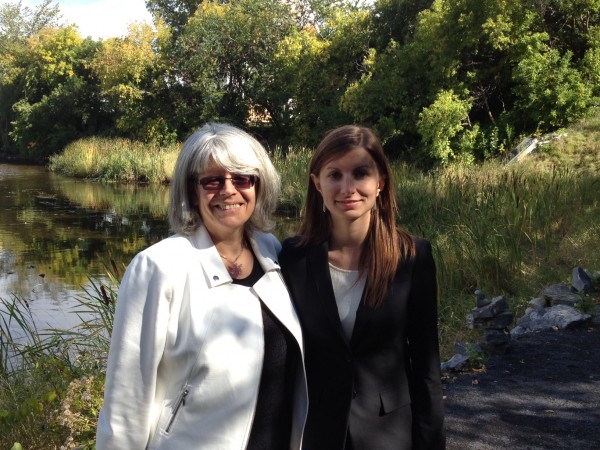
Gatineau, September 23, 2013 – The de Gaspé Beaubien Foundation, in collaboration with its partners, Ottawa Riverkeeper and Blue Legacy International, is pleased to announce the appointment of Adèle Michon as Director of Operations for Ottawa Riverkeeper in Quebec as part of the River Mission project, which aims to mobilize local communities and the entire population of Quebec to protect the Ottawa River, one of the most important rivers in Canada.
Mrs. Michon’s mandate will be to represent Ottawa Riverkeeper in Quebec, and to mobilize citizens, policy makers, governments and municipalities around a common vision for the future of the river, in order to create a healthy and sustainable tributary that adheres to an ecological plan for the well-being of all.
A new permanent position
With a Bachelor’s Degree in Environmental Studies and Sustainable Development from McGill University, and an MA in Geography from Carleton University, Adèle Michon has an excellent understanding of the issues related to the protection of rivers, as well as project management within non-profit organizations. She has accumulated considerable experience in Latin America, notably in Panama, Costa Rica and Mexico, and more recently coordinated regional public consultations about creating protected areas in the Ottawa region for the Conférence régionale des élus de l’Outaouais (CRÉO).
“In order to raise awareness among the population of Québec about the importance of ensuring the health and preservation of the Ottawa River, and the need to provide governance to ensure its preservation, we had to ensure that Riverkeeper has the best possible means of representation in the province,” underlines Dominique Monchamp, Director of Operations for the de Gaspé Beaubien Foundation. “The creation of this permanent position of Director of Operations for Quebec is the first step to achieve our objectives, and Adèle Michon’s profile is exactly what we were looking for.”
“We are delighted to welcome Adèle to our team because she will help balance our efforts to represent the territory served by the Ottawa River,” says Meredith Brown, Director of Ottawa Riverkeeper. “An increased presence in Quebec will enable us to better engage key decision makers and rally all those who love this major river that supplies all of Montreal’s population on a daily basis, a fact still unknown by many.”
River Mission
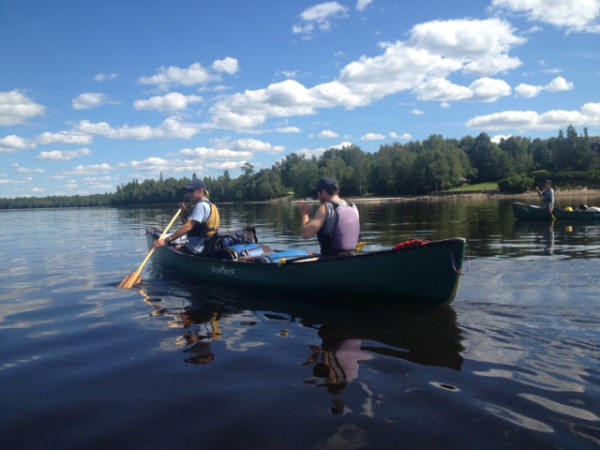
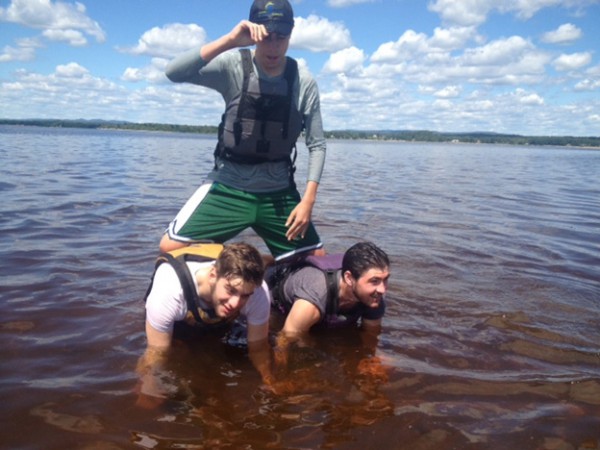
Last August, three young philanthropists from the fourth generation of the de Gaspé Beaubien family took part in an expedition on the river to better understand how they can make a difference and become committed River Mission spokespeople. From September 11-21, 2013, the Blue Legacy team, headed by Alexandra Cousteau, undertook an expedition on the river in order to film three short documentaries about the following subjects: water quality on the Ottawa River, the impact of dams on biodiversity, and the impact on the river of the lack of collaborative governance. These documentaries will be excellent tools to assess the state of the river and to educate citizens about how important this river is to Canada.
In 2014, a one-year tour will be organized to meet the stakeholders whose actions and decisions could have a direct impact on the state of the river. The de Gaspé Beaubien youth, Alexandra Cousteau and representatives from Ottawa Riverkeeper will take part in the tour; their mission is to learn about the issues and concerns of all stakeholders and to establish a dialogue to see how each of them can contribute to improving the state of the river. This project will wrap up at the second Ottawa River Summit in 2015, which will be held in the same venue to gather all decision makers and citizens who may have an impact on the river, to determine together an appropriate system of governance, supported by a plan of action adopted by the majority of stakeholders.
Blue Legacy is thrilled to return to Canada on September 12, 2013 to explore and film the Ottawa River, the natural and cultural heart of Eastern Ontario and Western Quebec, as part of River Mission, a joint initiative of Blue Legacy International, Alexandra Cousteau’s water advocacy non-profit, the de Gaspé Beaubien Foundation and the Ottawa Riverkeeper.
The de Gaspé Beaubien Foundation has funded River Mission, a multi-step initiative, to mobilize politicians, influential leaders, local communities and the entire population of Quebec to protect the Ottawa River, one of the most important rivers in Canada. As part of the initiative, Alexandra Cousteau will lead her expedition crew to the Ottawa River to tell the story of one of Canada’s greatest river and how government and citizens are innovating ways to ensure a healthy and sustainable future for the river. “We can’t forget what the river was like in its full glory,” said Ottawa Riverkeeper Meredith Brown. “One project at a time, one action at a time, we can work toward our larger goals.”
The film on the Ottawa River
Cousteau and her crew will spend 10 days shooting three short films about the river’s water quality, biodiversity and governance, respectively — and the people that champion those causes.
“What drew us to this region is the solution-oriented advocacy among its citizens to ensure a healthy future for this watershed”, says Alexandra Cousteau, granddaughter of famed undersea explorer Jacques Yves Cousteau. “It’s wonderful to see a community advocate for its freshwater resources and we’re delighted to be able to share that story with a wider audience.”
From government leadership improving aging infrastructure, to organized citizen monitoring programs, communities in Quebec and Ontario are demonstrating an increasing awareness and urgency for tackling the river’s water challenges. The ways in which Canadians are taking action to restore this critical water source carries lessons and inspiration far beyond the 200 municipalities and two million people that the Ottawa river serves. By looking just across the border where an estimated 850 billion gallons of untreated sewage and stormwater is discharged each year in the U.S., the need to capture and share successful approaches to solving these water quality challenges is evident.
Solutions
Similarly, the expedition team will explore ways in which hydroelectric dams along the river can be built without compromising a river’s aquatic biodiversity. With an estimated 2,350 hydro dams in North America , according to the National Hydropower Association, and 596 in Canada, according to Environment Canada , the pressing question of balancing sustainable development to protect aquatic biodiversity while meeting the energy needs of a growing population and supporting commercial business along the river presents a highly complex and dynamic challenge. Blue Legacy’s crew will look for leading examples of successful collaboration across diverse stakeholders and innovative solutions for establishing and ensuring this delicate balance.
How the river’s citizens are reclaiming the river’s sustainable future is a topic close to Blue Legacy’s heart. “Water is a critical life support system and for the first time in history, people are reclaiming their water,” says Alexandra Cousteau. “We are thrilled to be able to tell that story in the Ottawa River region.” Whether it’s through the work of passionate scientists, dedicated government officials or individual volunteers, the community along the Ottawa river has mobilized to restore and preserve this vital source of life, health and business.
Alexandra Cousteau and Blue Legacy will start filming in the Ottawa region on September 12th, 2013. People can follow the team in the field and stay looped into the adventure as Cousteau and her crew members post updates to Facebook, Instagram, and Twitter.
Media Contacts: Dominique Laverdure
E: dominique@rougemarketing.com
T: 514-378-8684 Amanda Pope
E: Amanda.pope@bluelegacy.net
T: +1 310 699 8160
What was the most precious moment of the day?
The most precious moment of my day was the entire day rafting because it was a great experience to hit the rapids and just splash into the water. What was the biggest obstacle of the day?
Definitely the cold weather because it was a very cloudy day and there was a lot of wind. Even though I was not cold after jumping into the water, getting back into the raft and when the water splashed you, you’d be freezing and so you have to wear these wet suits, like this kind of blue, water proof shirt. That was probably the biggest obstacle of the day. What did you learn new about the river today?
I learned that in the months between April and May, when all the snow melts and all this water goes into the river, it rises about 30 feet. You could see all these marks on the rocks, where the rocks are darker on the bottom and lighter on the top and it was a huge sign. It is amazing. It was pointed out that this huge island was completely submerged in the water during the flooding time. It was just shocking because it was so much taller than us. After this whole trip if you would have one comment or one lesson learned what would it be?
The last comment of the trip is that I’m very happy that I got this experience and going on the river was amazing this whole time. The camping and going into the SP rapids, we were able to eat that steak for the first time, a real meal. So it was great. I like to say thank you to everyone who helped us along the way.
What was the most precious moment of your day? The most precious moments of the day was probably finishing up the White water rapids. It was just a great sense of accomplishment for the whole team when we made it down there. What was the biggest obstacle of your day? The biggest obstacle of the day was probably getting everything packed on time. That was slow rush but thankfully we made it in time. It was the best day of White Water rafting I ever had. What did you learn new about the river today? What I learned about the river today is again just how precious it is not only to the community but to the watershed in general. It’s not only for the drinkable water, but also for the enjoyment it provides with. I have to say the trip has been life changing. It is true happiness to be spending time on the river. It makes you reconnect with nature and I think in today’s world we don’t do that enough. I think this is something people need to be more involved with. What are the lessons learned or any comments after this long trip? The trip has been amazing. It really has shown me that once you experience the river you understand what all the talk is about. People are really passionate about it. At the beginning of the trip, I was surprised by how warm and welcoming people were to us when they saw that we were going to change the river and they told us their stories. It gave me and my cousins a better perspective. We really began to understand why people fight for this river and its protection. It is a special place and it really supports the entire community and by community I mean the entire watershed: Montreal to Ottawa, Gatineau all the way up to Pembroke the native town. The trip definitely made it more concrete and we picked-up some knowledge that we wouldn’t have gotten otherwise, courtesy of Meredith from the Riverkeeper and Collin, our guide.
What was the most precious moment of the day?
My most precious moment of the day was probably the same thing as yesterday. It is when we were rafting. We reached a point in the rapids where we could get out of our rafts and just lie on our backs. I just enjoyed it and it was beautiful. It was really special. What was the greatest obstacle of your day?
I guess the greatest obstacle of my day was probably getting ready in the morning after camping the nights, making sure I had packed all my stuff making sure everything was good to go so that as soon as we were done rafting we would be able to head back home. I lost my necklace and my glasses, it was more intense for me and I made sure I had everything. What did you learn new about the river today?
I really didn’t know there were that many rapids on the river. As I said before, I really just thought it was a plain generic river, but going on these rapids, I thought maybe the river can be saved through tourism. We could use tourism as the driving force behind keeping the river the same as it is now. It is a great way to help the river. After this whole trip if you would have one comment or one lesson learned what would it be?
I have to say the Ottawa River isn’t just a river. It is connected to so many things. As I learned through the First Nations tribes, there is a circle of life through nature and through people and the Ottawa River will affect us not only by giving us water to drink but also helping us throughout life, helping the animals, helping our eco systems. We really are all connected to this river.